When the New PM Administers an Energy Price the Market Did Not Make
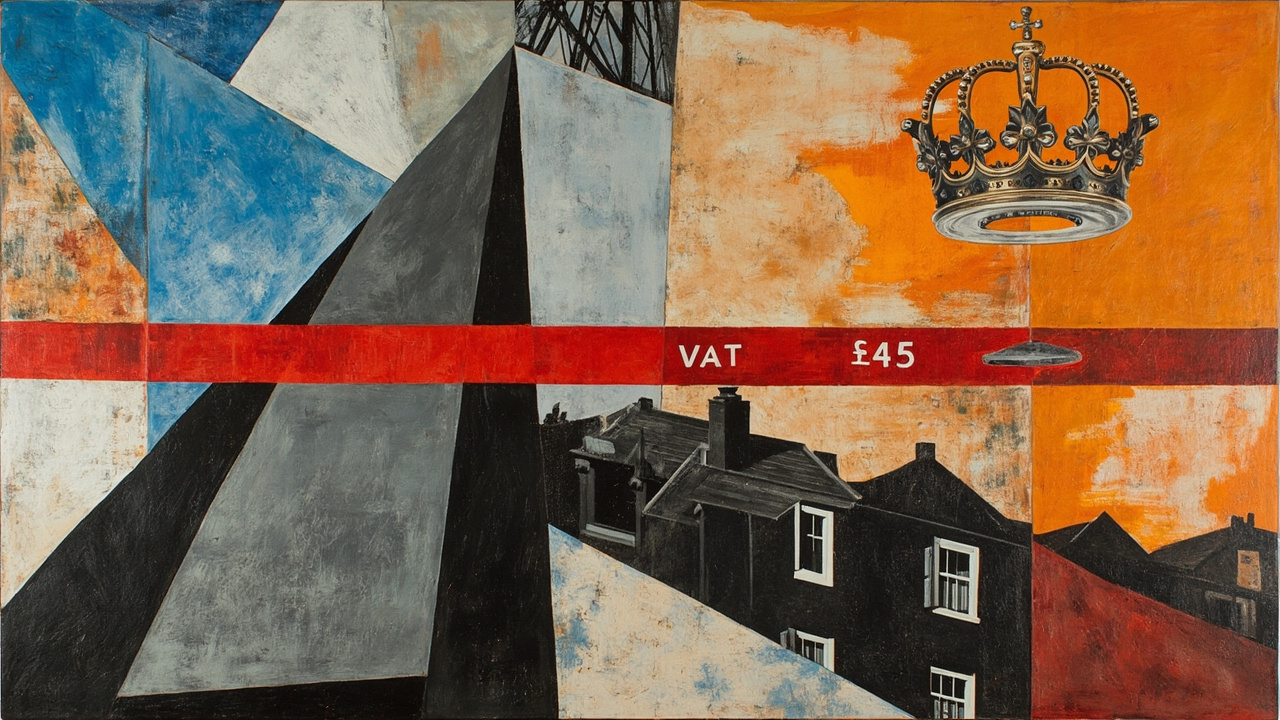
On his second day in Downing Street, the new Prime Minister Andy Burnham announced the removal of the 5% VAT rate from domestic electricity bills, effective 1 October 2026, reducing the Ofgem price cap by around £45 a year for a typical household on top of a £150 cut the previous Budget had already made. The Treasury says the measure will cut CPI by 0.10 percentage points and RPI by 0.14. The cost is around £850 million, funded by cancelling the £1.8 billion Digital ID programme. The press release reads as ordinary fiscal housekeeping.
Look closer and the announcement is not housekeeping. It is a price set by a political office on a commodity the office does not produce, store, transmit, or dispatch at the margin. The 5% rate sits between the supplier's invoice and the household's bill. The new 0% rate is meant to translate one-for-one into a lower cap. The Treasury is confident it will. Both confidences are administered. Neither has a price signal behind it.
What the Story Claims
The dominant narrative is generous. The new PM has acted fast, removed a regressive tax on a necessity, and funded the cut without new borrowing by killing an identity programme. The poorest households get the most relief. Suppliers are expected to pass the cut through to all customers, as they did with the £150 of relief at the last Budget. Northern Ireland households receive comparable funding because EU VAT rules do not apply there. Chancellor John Healey MP called the move an act that gives families "breathing room." The story is tidy.
The story is also missing the question an Austrian economist asks first. The £45 figure is not a price. It is an estimate of how a 5-percentage-point VAT removal will pass through to the household cap. It assumes pass-through is one-for-one, that suppliers will not retain the margin, that fixed-tariff customers will be credited, and that the Ofgem cap will absorb the cut. None of those assumptions are tested by exchange.
The Austrian Diagnosis
Ludwig von Mises (1881–1973), whose 1920 essay "Economic Calculation in the Socialist Commonwealth" identified why centrally planned economies cannot rationally allocate resources, named the underlying issue over a century ago. The calculation problem is that without prices for the factors of production, set by genuine exchange, no office can know whether it is producing too much of one factor and too little of another — too much nuclear and too little gas; too much credit and too little saving. The price the office publishes is not a price. The £45 figure sits exactly in that category: there is no underlying exchange for the 5-percentage-point VAT cut, only a Treasury estimate of how the cap formula will translate it.
The deeper problem is that the cut is layered onto an already-administered cap. The Ofgem cap is itself a regulatory computation of wholesale, network, policy, and operating costs plus a margin, divided by an assumed annual consumption. The cap is not a price. It is a quarterly budget for a typical household, dressed up as a price per kilowatt hour. Adding a Treasury-administered VAT adjustment to an Ofgem-administered cap compounds the administration. Two estimates meet. Neither is a price. The household bill is the residue of two calculations, neither tested by voluntary exchange.
Friedrich Hayek (1899–1992), the 1974 Nobel laureate who sharpened Mises into the knowledge problem, would have added a second cut. The Treasury does not know the marginal willingness-to-pay of each of the roughly 29 million UK households for the next kilowatt hour on a cold February evening. It does not know the marginal cost of the marginal megawatt the National Grid dispatches at 5:47pm. It does not know whether suppliers will pass the cut through, retain the margin, or shore up balance sheets. The £850 million fiscal cost is itself an estimate, contingent on wholesale prices it cannot forecast.
Three calculations meet in the household bill. The Treasury says the cut is "fully funded without new borrowing" by reallocating £1.8 billion from the Digital ID programme. The framing implies a hard reallocation: cancel real capital and redirect it. But there are allegations — in coverage of the Spring Statement and subsequent capital-plan reporting — that the Digital ID allocation was itself unfunded, a line in the spreadsheet without a firm departmental spending envelope. The Treasury is therefore not cutting one programme to fund another; it is closing one row and opening another in the same ledger.
The 2008 Parallel
The British state has been here before. On 24 November 2008, Alistair Darling's Pre-Budget Report cut VAT from 17.5% to 15%, effective 1 December, at an estimated fiscal cost of around £12 billion. The Treasury called it "support for British households and British businesses at this time of global economic uncertainty." The cut was a one-for-one pass-through estimate, calibrated without reference to what suppliers would actually do at the margin.
The empirical verdict is clean. UK GDP contracted by 4.2 per cent across 2009 — the deepest annual contraction since ONS records began. The cut produced no growth. The Treasury reversed the rate to 17.5 per cent on 1 January 2010, fourteen months later, as fiscal tightening resumed.
The rhetorical structure of Brown's announcement is identical to Burnham's. "Support" and "breathing room" are the same noun phrase in different fonts. Both cuts are framed as relief for a household pressure the office did not cause. Both rely on a one-for-one pass-through estimate to an administered downstream price and assume the supplier is a passive conduit. Brown's cut was funded by gilt issuance; Burnham's is funded by reallocating a capital line whose own fiscal standing has been reported as uncertain. Both Chancellors are asking the household to take the residue of a calculation as a real price.
The deeper lesson is intertemporal. Brown's cut shifted an estimated £12 billion of consumption forward by compressing the tax wedge for fourteen months; the reversal undid the shift in a single accounting period. The fiscal arithmetic was balanced on a Treasury projection of pass-through that proved wrong within two quarters. Burnham's cut is built on the same machinery, with one extra layer: the Ofgem cap has absorbed the cut and the Digital ID reallocation has absorbed the funding before either has reached an exchange. The cost of getting the pass-through wrong is paid by the household, not by the office.
Why This Matters for Sound Money
This is the diagnosis at the heart of Part 1 of Rails to Freedom — that the manipulation of credit, energy, housing, and labour prices, not their discovery by markets, builds the distortions the next decade pays for. The administered price is not a price. There is a computation, a publication, and a default; the computation is the Chancellor's, the cost the household's.
Part 3 of the book extends the point into the Ethereum era. Ethereum is the first public, programmable settlement layer in which Hayek's dispersed knowledge can aggregate without a central office as the bottleneck. A price on the probability of the next Ofgem cap, or on the next VAT move, can be set by continuous, public, decentralised exchange against real positions. The book calls this emergent process a spontaneous order — the pattern that arises from uncoordinated decisions.
What Markets Are Already Doing
That infrastructure already exists. Polymarket, a prediction market on Polygon (an Ethereum Layer 2 that settles every contract to Ethereum mainnet), runs continuously priced contracts on macroeconomic policy. Outcomes are resolved by UMA's Optimistic Oracle, a decentralised dispute layer that posts bond-secured votes on-chain. The same architecture could carry a market on the next Ofgem cap, on the next VAT move, on the realised pass-through of any administered price. The price the office cannot calculate can be calculated, every minute, on a public ledger wherever such a market is deployed.
Murray Rothbard (1926–1995), who combined Austrian economics with a radical critique of the state, would have said the same thing about the energy market he said about every other administered market: the regulator is a bottleneck, and the bottleneck is the loss. The loss shows up as a margin squeeze on suppliers, a forecast that breaks the moment wholesale moves, a bill that ignores the marginal cost of the marginal megawatt, and a fiscal cost that is itself an estimate without an underlying exchange.
Looking Ahead
The VAT cut takes effect on 1 October 2026. The Q4 Ofgem cap is published shortly after. If pass-through is one-for-one, households see £45; if partial, less, with the residue accruing to suppliers. The next Budget will revisit the £850 million cost; the October CPI print will register the 0.10pp effect, or it will not. Each print is a public verdict: the estimate preceded the exchange, and the verdict is the bill.